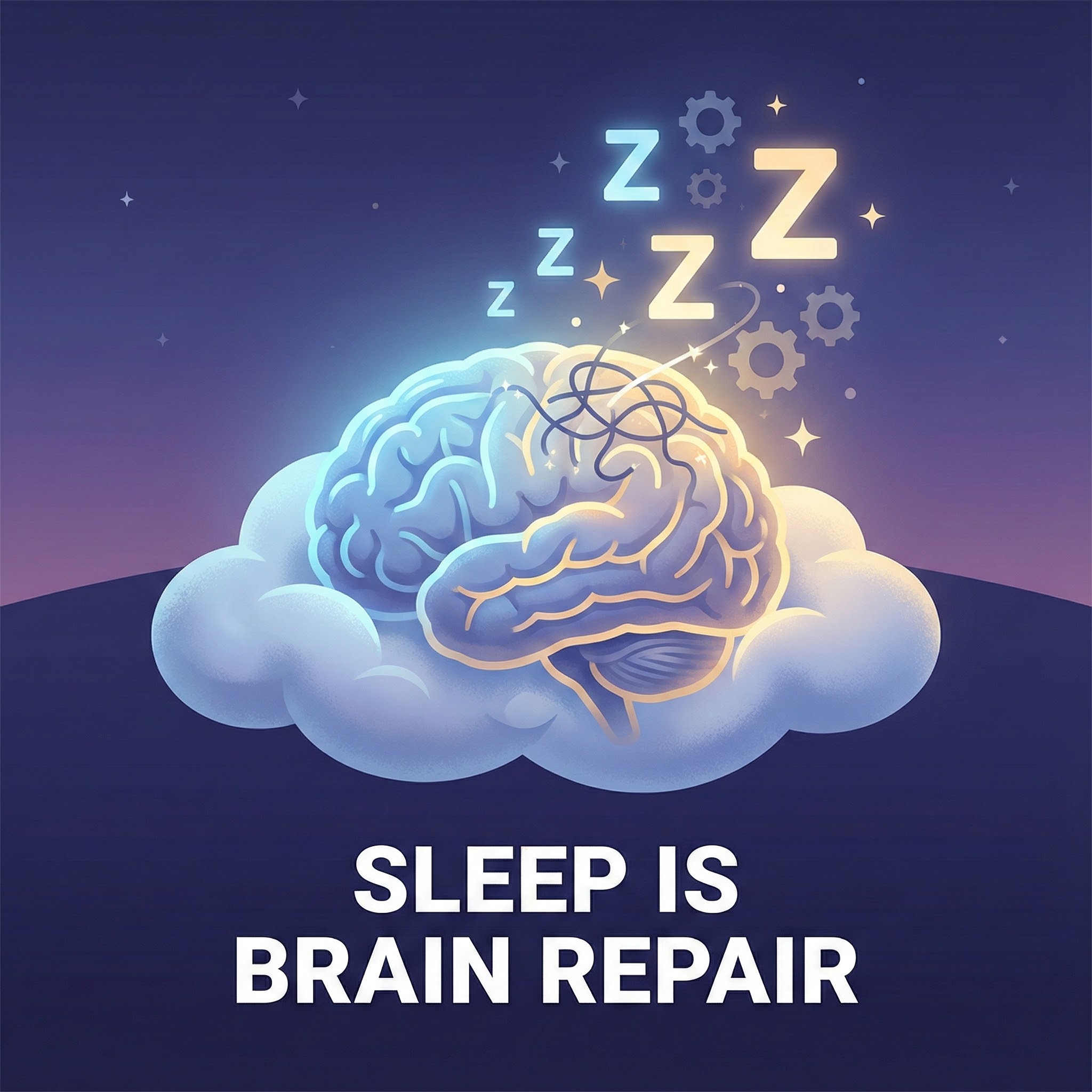
We live in a culture that loves to hustle. We wear our exhaustion like a badge of honor, bragging about how little sleep we got or how many coffees it took to get through the day. The underlying message is clear: sleep is for the weak, and productivity is king.
But as a mental health professional, I want to offer a different perspective. What if sleep isn’t a waste of time? What if it’s the most productive thing you do all day?
Imagine trying to run a marathon without drinking water. You wouldn’t do it. Yet, many of us try to navigate the emotional marathons of our lives—work, relationships, stress—without the essential fuel of sleep.
At Helping Hand Therapy, we often see clients who are doing everything “right”—going to therapy, exercising, trying to eat well—but they are still struggling with anxiety, irritability, and brain fog. When we ask about their sleep, the answer is almost always the same: “Oh, it’s terrible.”
Today, let’s shift the narrative. Sleep is not a luxury; it is a biological necessity, just like food and water. It is the foundation upon which your mental health is built.
What Happens When We Sleep? The Bidirectional Connection
Sleep is not just your body powering down. It is a highly active state where your brain is busy with crucial maintenance work.
According to sleep scientist Matthew Walker, author of Why We Sleep, sleep is your brain’s emotional first-aid. During REM sleep (dream sleep), your brain processes difficult emotions and memories from the day, taking the “sting” out of them. It’s like free nightly therapy. Without it, we remain emotionally reactive. A small annoyance becomes a major crisis because our emotional regulation center is offline.
The relationship between sleep and mental health is bidirectional, meaning it’s a two-way street.
- Mental health affects sleep: Anxiety can make your mind race, preventing you from falling asleep. Depression can lead to oversleeping or waking up too early.
- Sleep affects mental health: Poor sleep directly increases irritability, anxiety, and emotional instability.
You can’t fix one without addressing the other. They are two sides of the same coin.
Signs Your Sleep Needs Support
How do you know if your sleep is impacting your mental health? It’s not just about feeling tired. Look for these signs:
- Emotional Rollercoaster: You feel irritable, grumpy, or tearful over small things.
- Brain Fog: You have trouble concentrating, making decisions, or remembering things.
- High Anxiety: Your worries feel louder and harder to manage, especially at night.
- Low Motivation: You have no energy for the things you usually enjoy.
- The “Second Wind”: You feel exhausted all day, but as soon as you get in bed, you are wide awake.
The Science: Why You Can’t “Catch Up” on the Weekend
A common myth is that you can skimp on sleep during the week and “catch up” on the weekend. Science tells us this doesn’t work.
When you don’t get enough sleep (for most adults, that’s 7-9 hours), you accumulate “sleep debt.” Research published in the Journal of Clinical Sleep Medicine shows that chronic sleep restriction—getting just a little less sleep than you need night after night—leads to cumulative deficits in cognitive performance. You don’t just bounce back after one long Sunday morning sleep-in.
Consistency is key. Your body has an internal 24-hour clock, called your circadian rhythm, that loves routine. Erratic sleep schedules confuse this clock, making it harder to fall asleep and wake up when you need to.
5 Evidence-Based Tools for Better Sleep
Improving your sleep doesn’t have to be complicated. Here are five simple, research-backed interventions to help you build a healthier relationship with rest.
1. The “15-Minute Rule” (Stimulus Control)
This is a powerful tool from Cognitive Behavioral Therapy for Insomnia (CBT-I). Its goal is to retrain your brain to associate your bed only with sleep, not with worrying, scrolling, or tossing and turning.
How to practice:
- Go to bed only when you are truly sleepy (heavy eyelids, yawning).
- If you don’t fall asleep within about 15-20 minutes, get out of bed.
- Go to another room and do something relaxing in dim light (read a boring book, listen to soft music). Avoid screens.
- Only return to bed when you feel sleepy again.
- Repeat as many times as needed.
Best used when: You can’t fall asleep or you wake up in the middle of the night and can’t get back to sleep.
2. Create a “Sleep Sanctuary”
Your environment has a huge impact on sleep quality. The National Sleep Foundation recommends making your bedroom a cave: cool, dark, and quiet.
How to practice:
- Cool: Aim for a thermostat setting between 65-68°F. Your body needs to drop its core temperature to initiate sleep.
- Dark: Get blackout curtains or wear a comfortable sleep mask. Even small lights from electronics can disrupt melatonin production.
- Quiet: Use a white noise machine or a fan to drown out sudden noises that might wake you.
Best used when: You find yourself waking up frequently during the night.
3. The “Worry Journal” (Cognitive Offloading)
Anxiety is a major sleep thief. When your head hits the pillow, your brain often decides it’s the perfect time to review every mistake you’ve ever made. Get those thoughts out of your head and onto paper.
How to practice:
- Keep a notebook and pen on your bedside table.
- About an hour before bed, write down everything that is worrying you or everything you need to do tomorrow.
- Tell yourself, “I have written this down. It is safe on the paper. I can deal with it tomorrow. Tonight, I am off duty.”
Best used when: Racing thoughts keep you from falling asleep.
4. Set a Consistent “Sleep Window”
Your circadian rhythm thrives on predictability. Going to bed and waking up at the same time every day—yes, even on weekends—is one of the most effective ways to regulate your sleep.
How to practice:
- Choose a realistic wake-up time that you can stick to seven days a week.
- Count back 8 hours to find your target bedtime.
- Commit to this schedule for at least two weeks. You’ll likely find you start getting sleepy right around your target bedtime naturally.
Best used when: Your sleep schedule is chaotic or you feel permanently jet-lagged.
5. The “Digital Sunset”
The blue light emitted by phones, tablets, and TVs tricks your brain into thinking it’s still daytime, which suppresses the production of melatonin, the hormone that helps you sleep.
How to practice:
- Set a firm “digital curfew” 60-90 minutes before you want to be asleep.
- Put your devices away—preferably in another room so you aren’t tempted to check them.
- Use that time for a relaxing wind-down routine: take a warm bath, read a physical book, or do some gentle stretching.
Best used when: You feel “wired but tired” at night.
When to Seek Professional Help
While these tips can be incredibly helpful, sometimes sleep problems run deeper. If you’ve tried these strategies consistently for a few weeks and are still struggling, it might be time to seek professional support.
Consider reaching out to a therapist or your doctor if:
- Your sleep problems have lasted for more than a month.
- Your lack of sleep is significantly impacting your work, relationships, or mood.
- You suspect you might have a sleep disorder like sleep apnea (e.g., loud snoring, gasping for air at night).
- Your anxiety or depression feels too heavy to manage on your own.
A therapist can help you address the underlying thoughts and behaviors that are perpetuating your sleep struggles, using proven methods like CBT-I.
Trusted Resources
- National Sleep Foundation A reliable source for information on sleep health, sleep disorders, and tips for better rest.
- American Academy of Sleep Medicine (AASM) – Sleep Education Provides patient-focused information about sleep and sleep disorders from medical professionals.
- National Institute of Mental Health (NIMH) Offers information on the connection between sleep and mental health conditions.
Conclusion
Changing your relationship with sleep takes time, so be patient with yourself. Start with just one of these tools and give it a fair shot. Remember, rest is not something you have to earn. It is a fundamental human need. By prioritizing sleep, you aren’t just taking care of your body; you are investing in your emotional resilience, your focus, and your overall well-being. Give yourself permission to rest. You deserve it.
How We Can Help
If you’re in Southern Oregon and looking for support with sleep, anxiety, or mood, I’d be honored to help. At Helping Hand Therapy, we provide compassionate, evidence-based care in Ashland and Medford, as well as online throughout Oregon. We understand the complex link between sleep and mental health. Schedule a free 30-minute consultation at helpinghandtherapy.net to see if we’re a good fit.
You can also visit our website at helpinghandtherapy.net for our community calendar, additional resources, and helpful tools.
If you’re in crisis:
- 988 Suicide & Crisis Lifeline: Call or text 988 (available 24/7)
- Crisis Text Line: Text HOME to 741741
- SAMHSA National Helpline: 1-800-662-4357
REFERENCES (APA Format)
Banks, S., & Dinges, D. F. (2007). Behavioral and physiological consequences of sleep restriction. Journal of Clinical Sleep Medicine, 3(5), 519–528.
Irish, L. A., Kline, C. E., Gunn, H. E., Buysse, D. J., & Hall, M. H. (2015). The role of sleep hygiene in promoting public health: A review of empirical evidence. Sleep Medicine Reviews, 22, 23–36.
National Sleep Foundation. (2023). Bedroom Environment: What Elements Are Important? Retrieved from https://www.sleepfoundation.org/bedroom-environment
Walker, M. (2017). Why We Sleep: Unlocking the Power of Sleep and Dreams. Scribner.